RFID Case Study: Tracking FloraHolland lock plates to reduce losses in floriculture transport
Fa. J. Dobbe & Zn. Transport is a Dutch transport company active in floriculture, running frequent short-haul routes between growers and the FloraHolland auction. For these transports, the company uses FloraHolland auction trolleys fitted with rented lock plates. Losing track of these lock plates can lead to significant ongoing rental and replacement costs. System integrator RTiOT implemented an automated UHF RFID solution, using Chainway readers and Times-7 antennas supplied by Cisper, to give Dobbe greater visibility into approximately 9,000 lock plates in circulation.
.png)
Challenge
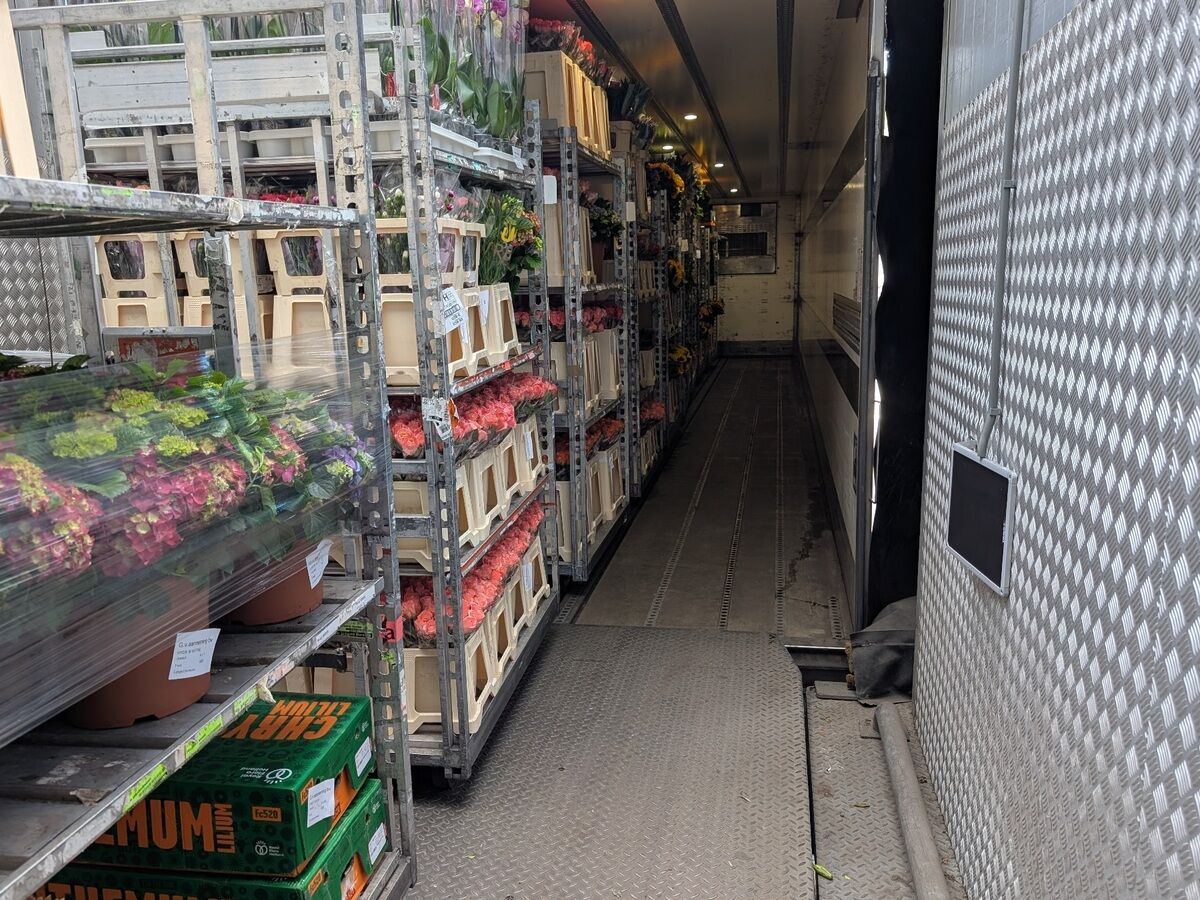
Dobbe transports flowers and plants between growers and the FloraHolland auction, using FloraHolland auction trolleys for these short-distance logistics movements.
When a auction trolley leaves the auction premises, it must be fitted with a rented lock plate. The plate locks onto the trolley and gives the user the right to take it off-site. Dobbe has approximately 9.000 of these lock plates in circulation.
Losing visibility of these plates can become costly. When a lock plate is no longer part of the logistics process but remains registered as rented, rental costs continue. If a lock plate cannot be returned, additional costs may also apply.
Previously, Dobbe had limited insight into which lock plates were still actively circulating. Employees periodically scanned a limited number of lock plates manually using barcodes, but this manual process provided information on only around 5% of them.
Dobbe therefore approached RTiOT with a clear objective: create an automated way to register lock plates as they move through the facility and provide better insight into which plates are still in circulation and when they were last seen.
A useful starting point was already present. Every FloraHolland lock plate contains an embedded UHF RFID tag alongside its GS1 barcode. RTiOT could therefore build the solution around the existing tags without adding new RFID labels to the approximately 9.000 assets.
Solution
RTiOT developed an automated RFID tracking system around Dobbe's loading docks and personnel entrances. In total, seven RFID read points were installed: five at dock doors and two at personnel doors.
Automated RFID reading at the dock doors
The five dock doors form the main checkpoints for auction trolleys entering and leaving the facility. Each read point uses a Chainway U300 fixed RFID reader with two Times-7 A6032 antennas, supplied by Cisper.
The antennas automatically read the UHF RFID tags embedded in the lock plates as the auction trolleys pass through the docks. This removes the need for employees to scan the plates individually.
The reading environment presented a specific technical challenge. The lock plates are positioned at the front of the metal auction trolleys, while the antennas are installed at the side of the passage. As a result, the RFID tags are not always oriented directly towards the antennas.
In addition, Dobbe can move trains of up to approximately 20 auction trolleys through a dock at relatively high speed. The system also needs to read the tags in both directions, as the orientation of the lock plates changes between loading and unloading.
RTiOT carried out several tests to determine the correct antenna positions and angles. The Times-7 A6032 antennas provide a wide, circular read field that helps accommodate varying tag orientations. Their slim design also allows them to be mounted close to the dock structure, reducing the risk of damage from passing trolleys.
Capturing lock plates through personnel entrances
Not every lock plate passes through a loading dock. Drivers and other employees may also carry multiple loose plates under their arm through a personnel entrance on their way to a truck.
To capture these movements as well, RTiOT installed two additional RFID read points at the personnel doors. These use the same Chainway U300 readers, combined with Times-7 A5010 antennas.
At these locations, the antennas are mounted higher and angled downwards towards people walking through the doorway. This different configuration allows the system to detect lock plates carried by hand rather than attached to a auction trolley.
Each of the seven RFID read points uses two antennas.
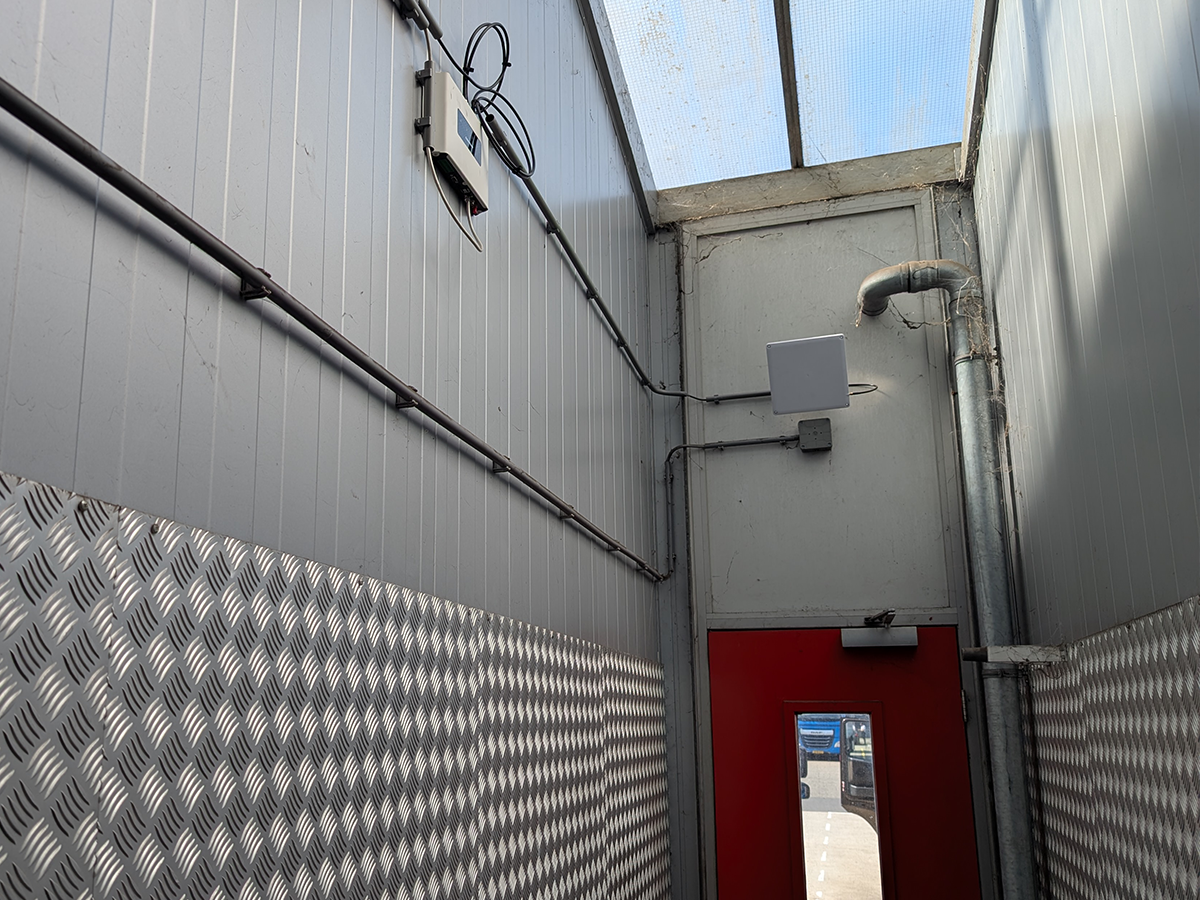
RFID read point at a personnel entrance, using a Chainway U300 reader and Times-7 A5010 antenna.
Connecting RFID data to Floritrack
Each lock plate also carries a GS1 barcode. Within RTiOT's system, the barcode is linked to the EPC stored on the RFID tag, allowing the system to identify the individual lock plate when its tag is read.
RTiOT developed the middleware that collects the RFID data from the seven read points, removes duplicate detections and passes the information in a simplified format to Floritrack.
For each detection, the system records which lock plate was seen, at which read point and at what time.
Floritrack combines these RFID registrations with Dobbe's list of rented lock plates. This creates an automatically updated overview of which plates are still appearing in the logistics process and which have not been detected for an extended period.
If a lock plate appears to be missing, Dobbe can look back at its last recorded movement. The company can determine which dock it passed through and at what time, then relate this information to the truck that was positioned at the dock and potentially to the grower associated with that transport movement.
Floritrack can also generate a notification if a previously missing or bought-out lock plate is detected again.
Results
The RFID solution has significantly increased Dobbe's visibility into its lock plate population:
- Scan coverage increased from approximately 5% to almost 60%: Before the RFID implementation, Dobbe relied on periodic barcode sampling. After approximately one month of live operation, the automated RFID system was already registering close to 60% of the lock plates.
- Better visibility into active lock plates: More recent data in Floritrack shows that approximately 75% of Dobbe's lock plates are actively used within its own processes. Part of the remaining group has been rented onward to customers and may return to the process later.
- Improved traceability: Dobbe can see when and where a registered lock plate was last detected, making it easier to investigate plates that have disappeared from circulation.
- Automated registration: Lock plates are detected automatically as auction trolleys move through the loading docks or employees carry plates through the personnel entrances. Manual scanning is now mainly required at the FloraHolland return points.
- Better control of rental costs: Plates that have not appeared in the logistics process for an extended period can be identified, allowing Dobbe to decide whether continuing to rent them still makes sense.
- Reuse of existing UHF RFID tags: Because the tags were already embedded in the FloraHolland lock plates, no additional RFID tags had to be applied to the approximately 9.000 assets.
Conclusion
RTiOT's RFID solution gives Fa. J. Dobbe & Zn. Transport considerably more visibility into the movement of approximately 9.000 FloraHolland lock plates. By combining seven automated RFID read points with Floritrack, a process that previously relied on occasional barcode scans has become largely automatic.The system helps Dobbe identify which lock plates are still active, see when and where individual plates were last detected and investigate assets that have disappeared from the logistics process. The increase in scan coverage from approximately 5% to almost 60% within the first month provides a much stronger basis for managing the lock plate population and reducing avoidable rental and replacement costs.
The project also demonstrates how existing UHF RFID tags in reusable transport assets can be used to improve traceability without introducing an additional tagging process.
Used Cisper products: